

H1 Requirements for Embedded Heating in New Zealand
(2022 Update Guide)
Hydronic underfloor heating must comply with New Zealand Building Code Clause H1 – Energy Efficiency. Since the 2022 update, stricter insulation and R-value requirements apply, particularly for buildings using embedded heating systems. This guide explains H1 requirements, R-values, and compliance pathways to help homeowners, designers, and builders understand what is required.
About H1 requirements for embedded heating
-
A:
The new H1 Code refers to New Zealand Building Code Clause H1 - Energy Efficient, which was amended/updated in August 2022.
-
A:
The measure of thermal resistance is used in the building and construction industry. It indicates how well a material insulates and resists heat flow.
The higher the R-value, the better the insulation properties.
-
A:
Here are the 5th editions, amendment 1 Effective on 4 August 2022
H1 Energy Efficiency Acceptable Solutions on H1/AS1 for buildings up to 300m2
H1 Energy Efficiency Acceptable Solutions on H1/AS2 for buildings greater than 300m2
New versions may be available after this page's publication. We recommend checking for the latest updates as this content may not reflect the most current information.
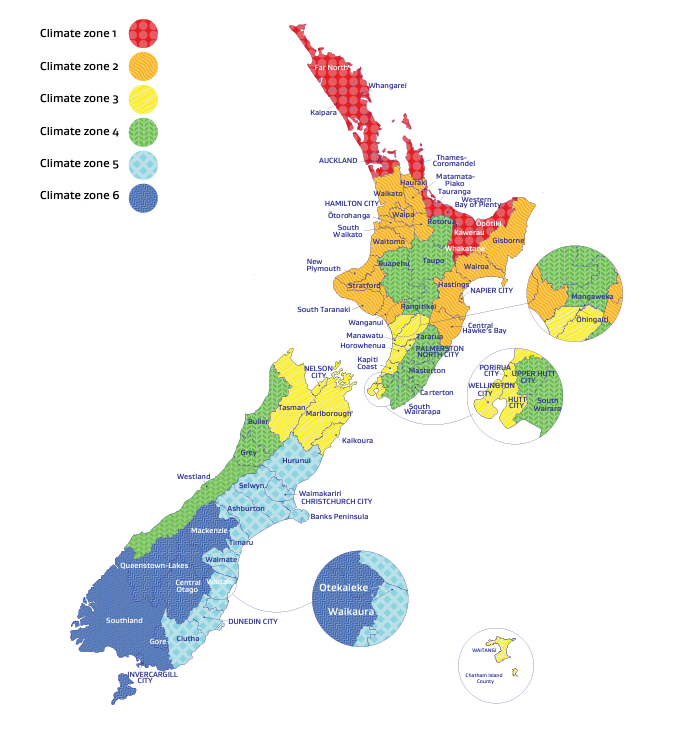
Map of Different Climate Zones
What are the compliance pathways under H1?
There are three compliance pathways:
1.The Schedule Method which prescribes tabulated minimum construction R-values for the roof, walls, windows, doors, skylights and floors of a building based on its location in the country
The schedule method is the most prescriptive. Compliance is gained by meeting the minimum requirements of the tables.
2.The Calculation Method which is based on simple equations and allows a designer to customise the insulation levels between different building elements to give the same relative heat loss as a building that complies with the schedule method.
This method permits roof, wall, floor, window, door and skylight insulation combinations that differ from these tables, but the building must perform at least as well as the reference building.
3.The Modelling Method which uses computer modelling to demonstrate that the proposed building does not require more heating and cooling energy than a reference building that complies with the schedule method. It provides the greatest flexibility to customise insulation levels.
How does H1 affect underfloor heating systems?
H1 requirements directly impact the design of hydronic underfloor heating systems. Floors with embedded heating must meet minimum R-values, regardless of the compliance method used.
This means:
Slab insulation is essential
Heat loss into the ground must be minimised
System efficiency depends heavily on insulation design
Proper slab insulation improves performance, reduces running costs, and ensures compliance with H1 regulations.
Frequently Asked Questions
Q: What R-value is required for underfloor heating in NZ?
The required R-value depends on climate zone, building size, and construction method. However, for embedded heating systems, minimum R-values must always be met and cannot be reduced.
Q: Can I reduce insulation requirements using modelling?
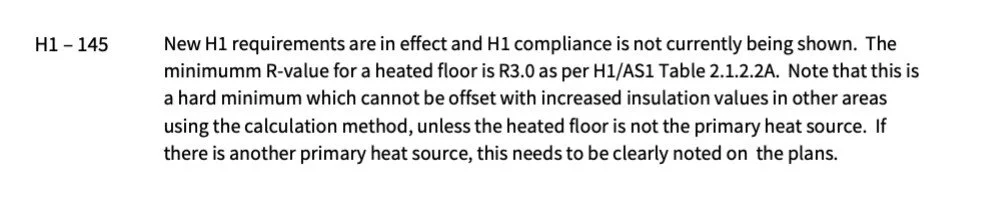
No. For floors with embedded heating, minimum R-values apply regardless of the compliance pathway. These cannot be reduced using calculation or modelling methods.
Q: Why is insulation more important for underfloor heating?
Underfloor heating relies on retaining heat within the slab. Without proper insulation, heat is lost into the ground, reducing efficiency and increasing energy costs.
Q: Which compliance method is best?
The Schedule Method is the simplest, while the Calculation and Modelling Methods offer more flexibility. The best option depends on the project design and performance goals.
Under Schedule Method,
R-value tables with embedded heating

Buildings up to 300m2

2. Buildings above 300m2
Free tools that have implemented the scheduled method include BRANZ’s H1 Schedule method tool.
Under Calculation Method
Please note: The minimum R-values for building elements with embedded heating apply irrespective of the chosen compliance pathway. They cannot be reduced by using calculation or modelling methods.
Free tools that have implemented the calculation method include the New Zealand Green Building Council’s H1 Calculator and BRANZ’s H1 Calculation method tool.
Slab Suppliers’ Online Calculators
Website calculator: Thermal Calculator

Website calculator: The R-value-Calculator

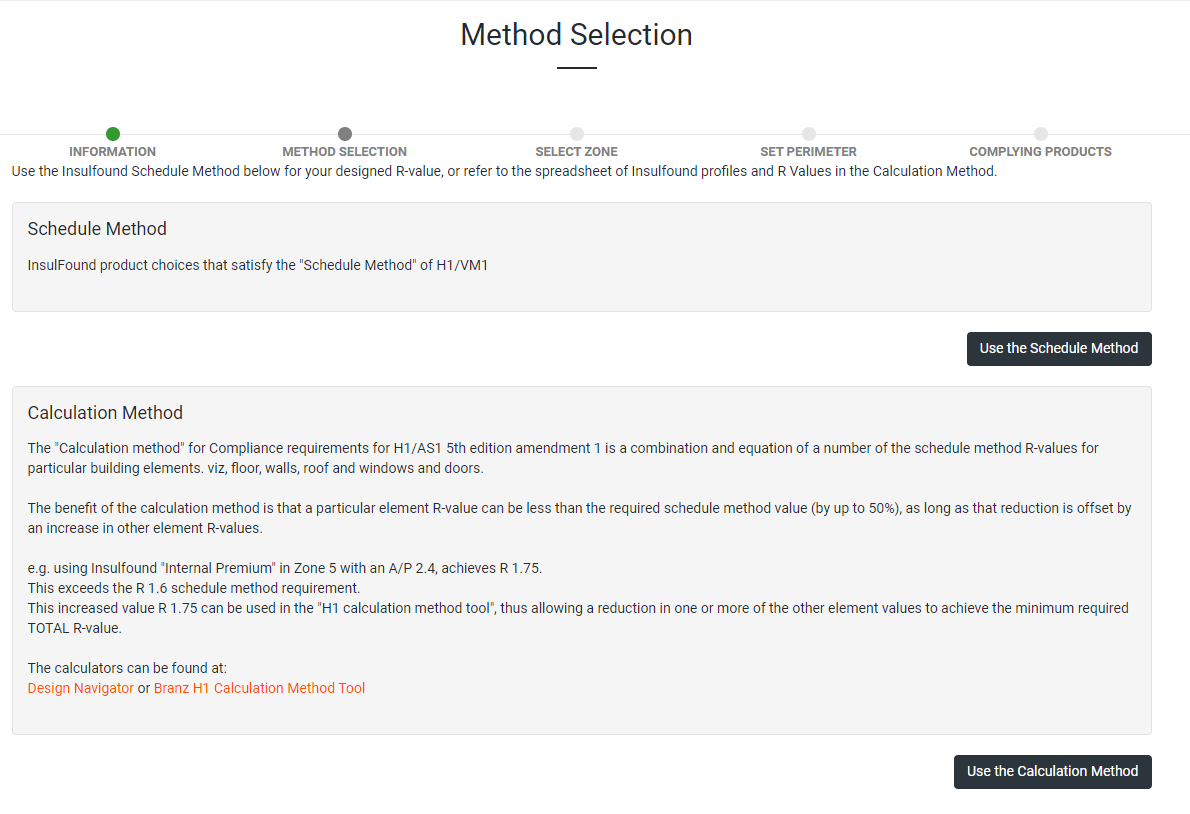
Website calculator: InsulFound Thermal Calculator
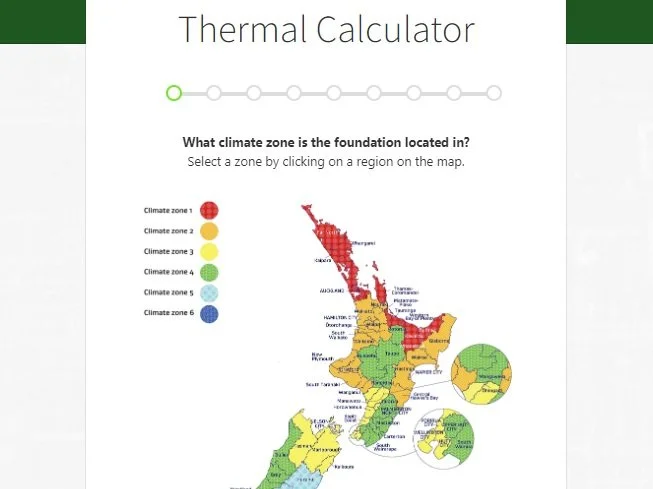
Every Council is different, here are some historical applications…
Project A:
Christchurch City Council asked:
A footing detail showing slab edge insulation + specs.
Justify the construction R-value of the slab with R 3
Complete the H1 calculation table to show R-value

Project B:
Additional Information for design professionals
BRANZ House Insulation Guide 6th edition
Important Disclaimer
This page provides general guidance only. Building regulations may change, and requirements may vary between councils. Always consult official documents or qualified professionals to confirm compliance.